

Reviewed by
Jarrett Dottin
Licensed Occupational Therapist dedicated to helping others live their best lives. Certified lymphedema therapist and amazon affiliate who has tested over 1,000 different products. About JD →
As an Amazon Associate I earn from qualifying purchases. Some links on this site are affiliate links, if you buy though them I may make a commission at no extra cost to you.
Quick Verdict
Seven padded handles and a 350lb capacity is what separates this gait belt transfer from the thin single-loop belts I’ve fought with for years. The extra-wide 4-inch nylon spreads pressure instead of digging in, and the metal quick-release buckle comes off fast in a tight bathroom. For bariatric and heavier-assist work, this is the belt I’d hand a family caregiver without a second thought.
Clicking takes you to the seller's website. We may earn a small commission if you purchase, at no extra cost to you.
| Weight capacity | 350 lbs (ADA compliant) |
|---|---|
| Handles | 7 padded grab points |
| Width | 4 inches |
| Fits waist | Up to 51″ |
| Buckle | Metal quick-release with grabbing teeth |
| Guarantee | 60-day satisfaction guarantee |
Gait Belt Transfer: Why Pre-Positioning Matters Most
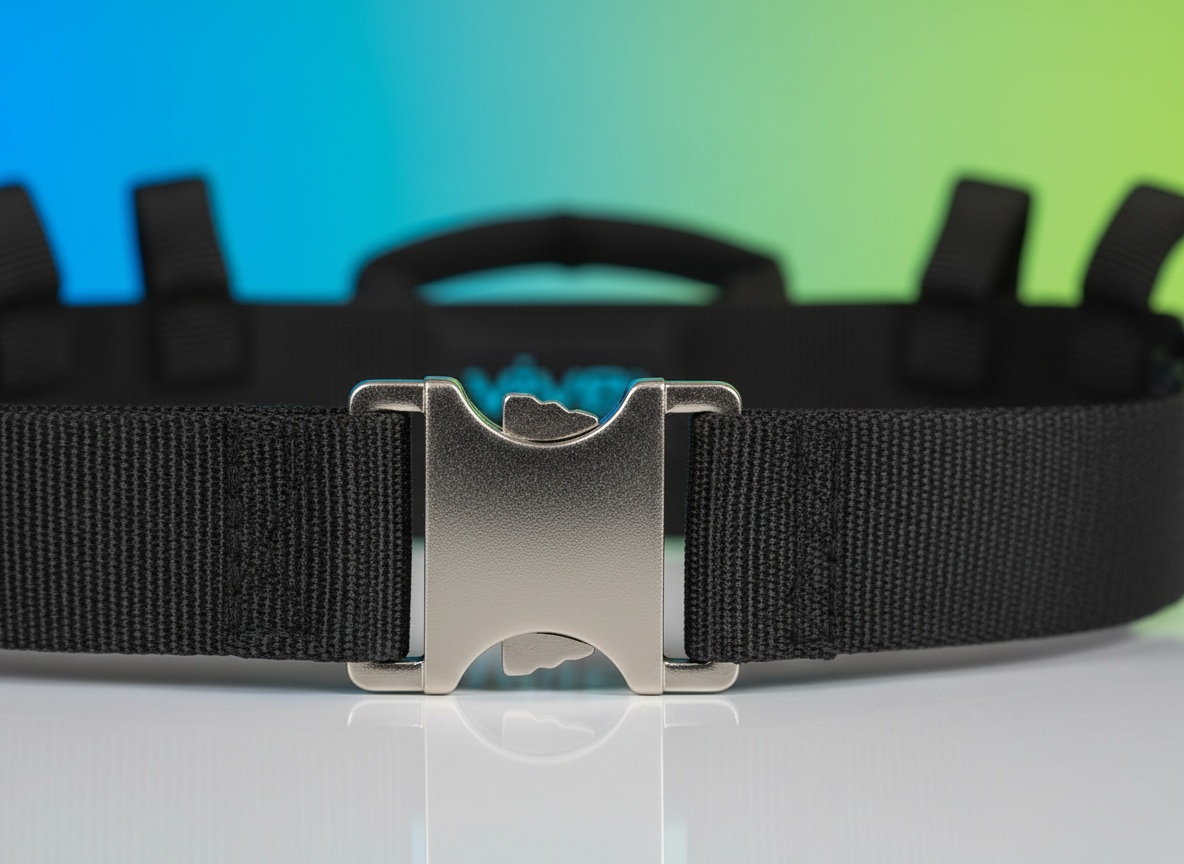
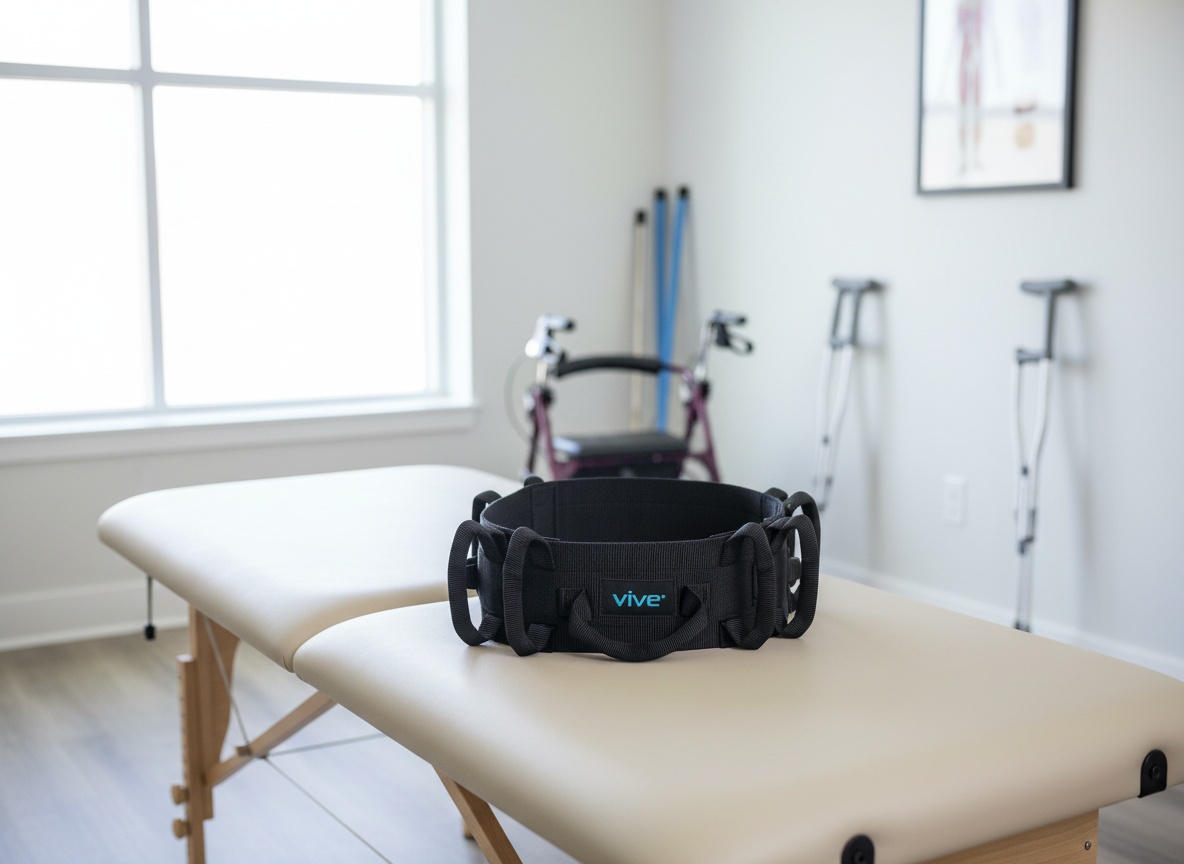
Fifteen years of transfers taught me one thing fast: the belt fails you at the worst angle. You’re crouched sideways in a bathroom, the patient starts to sag, and the one loop you have is on the wrong hip. That’s the exact problem the Vive gait belt transfer is built to solve, and it’s why I wanted to talk through it. Seven padded handles wrap the whole belt, so wherever your hand lands, there’s a grip waiting.
As an OT and lymphedema therapist, I’ve used gait belts in home health, outpatient rehab, and acute care. The tool matters because a bad one doesn’t just fail the patient, it’s how caregivers end up with herniated discs. I’ve seen both.
What Vive Actually Built Into This Belt
350-pound capacity is the headline, and it’s the number that matters for bariatric work. Most drugstore gait belts are a single 2-inch strip of webbing with one hand loop. This one is 4 inches wide, reinforced nylon, with seven padded handles distributed around the circumference. It adjusts to fit a waist up to 51 inches, and the closure is a metal quick-release buckle with grabbing teeth, not a plastic clip.
The extra width isn’t just marketing. A wider band spreads the load across more surface area, which means less pressure cutting into the abdomen during a lift. Vive lists it as ADA compliant and backs it with a 60-day guarantee.
Where the Seven Handles Earn Their Keep
The seven handles change how you position yourself, and that’s the real win. During a sit-to-stand, I want a vertical grip near the hips. During a lateral bed-to-chair, I want a handle on the side facing the destination. With a single-loop belt you contort yourself to reach the one handle. With this, you grab whichever handle keeps your own spine neutral and your feet under you.
That matters more with heavier patients. When you’re assisting someone near that 350-pound ceiling, a bad grip angle is how caregivers get hurt. Being able to grab from any angle, front, back, or either side, lets you keep the load close to your body where your legs can do the work instead of your back.
The Buckle Is Fast, But Learn It First
The metal quick-release buckle is quicker in tight spaces, but the grabbing-teeth mechanism is not intuitive the first time. If you’ve only ever used plastic side-squeeze buckles or a friction loop, expect a minute of figuring out how the teeth seat and release. Do that on a table before you do it on a person. A caregiver fumbling a buckle mid-transfer is exactly the moment you don’t want to be learning.
Once you know it, the metal buckle is a step up from plastic clips that crack and slip. But it’s the one part of this belt I’d insist a new caregiver practice with first.
Get it now
Vive Gait Belt Transfer (350lbs)
Get the best price on Amazon →As an Amazon Associate I earn from qualifying purchases. Some links on this site are affiliate links, if you buy though them I may make a commission at no extra cost to you.
Who I’d Hand This To
This is the belt for anyone doing regular heavier transfers, and I mean that specifically. Family caregivers moving a larger loved one from bed to wheelchair to bathroom. Home health aides and PT/OT clinicians who need padded grips from every angle. Facilities doing bariatric transfers where a thin drugstore belt just isn’t rated high enough.
The 51-inch waist range and 4-inch width also make it a real option for patients that a standard gait belt simply won’t fit or won’t comfortably support. If you’ve been white-knuckling transfers with a belt that feels too small, this closes that gap.
How It Compares to a Standard Posey-Style Gait Belt
A classic Posey-style belt does one thing well: it disappears into a bag. It’s a thin canvas strip with a single metal loop, cheap, light, and ready in seconds. For a patient who mostly needs a light hand on a steady walk down the hall, that’s genuinely enough.
But that same simplicity is its ceiling. No handles means you’re gripping raw webbing, which cuts into your fingers on a heavy lift, and most standard belts aren’t rated near 350 pounds. This Vive belt trades pocket-size portability for handles, width, and capacity. If your transfers are light and occasional, a plain gait belt is fine. If they’re heavy, frequent, or bariatric, the transfer belt handles here are worth the bulk.
My Advice Before You Buy
Measure the waist first. It fits up to 51 inches, and a belt that’s too loose slides up under the ribs mid-lift, which defeats the whole purpose. It should sit snug over clothing at the waist, not the belly. Two fingers should fit under it, no more.
One hard limit: if your patient is a full lift, no weight-bearing, no ability to follow cues, put this belt down and get a mechanical lift. No capacity rating fixes a wrong tool. Within its actual lane, though, this is the best-built gait belt I’ve used at this price point.
Pros
- Seven padded handles let you grip from any angle without twisting your own spine
- 350lb capacity handles bariatric transfers that standard belts aren’t rated for
- Extra-wide 4-inch nylon spreads pressure instead of digging into the abdomen
- Metal quick-release buckle beats crack-prone plastic clips
- Fits waists up to 51 inches, wider than most drugstore belts
Cons
- The grabbing-teeth metal buckle takes a minute to learn and isn’t intuitive at first
- Bulkier and less packable than a thin classic gait belt
- Still an assist device, not a substitute for a mechanical lift with non-weight-bearing patients
Frequently Asked Questions
What is the actual weight limit on this gait belt transfer?
It’s rated to 350 pounds and listed as ADA compliant. That capacity, paired with the 4-inch width and reinforced nylon, is what makes it suitable for bariatric assists that thinner belts can’t safely handle.
How do I clean it between patients?
Spot clean the nylon webbing with a disinfectant wipe or mild soap and water, then air dry. Avoid soaking it or running it through a hot dryer, which can weaken the stitching and warp the padding over time.
Will it fit a larger patient?
Yes, it adjusts to fit waists up to 51 inches, which is wider than most standard gait belts. Measure over the clothing the patient will actually wear during transfers to be sure before ordering.
Can one caregiver use it alone, or does it need two people?
One caregiver can use it for a patient who bears some weight and follows cues. If the person can’t assist at all or is a full-lift situation, you need a second person or a mechanical lift regardless of the belt.
Is this different from a Posey gait belt?
Yes. A Posey-style belt is usually a thin canvas strip with a single metal loop and no handles. This Vive belt is wider, rated to 350 pounds, and has seven padded handles for grip from any angle, which is the main upgrade for heavier transfers.
Does it require any assembly or accessories?
No. It arrives ready to use out of the package with the buckle and handles already attached. There’s no app, no subscription, and no add-ons required for it to work.
What if it doesn’t work out?
Vive backs it with a 60-day satisfaction guarantee. Check the current return window on the product page at purchase, since Amazon’s standard return policy applies on top of the manufacturer guarantee.
Can I use it for gait training and walking, not just transfers?
Yes, that’s a core use. The handles give you a steady grip to guard someone during ambulation and to catch a stumble. It doubles as both a transfer belt and a gait-training belt, which is why the padded grip matters as much for walking as it does for lifting.
Get it now
Vive Gait Belt Transfer (350lbs)
Get the best price on Amazon →As an Amazon Associate I earn from qualifying purchases. Some links on this site are affiliate links, if you buy though them I may make a commission at no extra cost to you.
About the reviewer
Jarrett Dottin
Licensed Occupational Therapist dedicated to helping others live their best lives. Certified lymphedema therapist and amazon affiliate who has tested over 1,000 different products.