

Reviewed by
Jarrett Dottin
Licensed Occupational Therapist dedicated to helping others live their best lives. Certified lymphedema therapist and amazon affiliate who has tested over 1,000 different products. About JD →
If you or someone you love has been diagnosed with lymphedema, one of the first questions you probably have is: “Can this be reversed?” The answer depends on how early it’s caught and what stage it’s in. The good news? In the early stages, lymphedema can often be reversed. But the longer it goes untreated, the harder it becomes to manage.
Let’s break it all down in plain language.
What Is Lymphedema?
Lymphedema is a condition where fluid builds up in your body’s tissues, usually in an arm or leg, because your lymphatic system isn’t draining properly. Think of your lymphatic system like a network of tiny drains. When those drains get damaged or blocked (often from cancer treatment, surgery, or radiation), fluid backs up and causes swelling.
The 4 Stages of Lymphedema
Doctors use a staging system to describe how far lymphedema has progressed. Understanding the stage is key to understanding whether it can be reversed.
Stage 0 (Subclinical): Your lymphatic system is damaged, but you can’t see any swelling yet. You might feel heaviness or fatigue in the limb. At this stage, the condition is invisible but detectable with special tools.
Stage 1 (Mild/Reversible): Swelling appears, but it goes down when you elevate the limb. The tissue is still soft and may leave a dent when you press on it (called “pitting”). This stage is considered reversible with treatment.
Stage 2 (Moderate/Harder to Reverse): The swelling doesn’t go away with elevation anymore. The tissue starts to harden and become fibrotic (tough and scarred). This stage is much harder to reverse, but treatment can still reduce swelling and slow progression.
Stage 3 (Severe/Irreversible): The limb becomes very large with thick, hardened skin. Skin changes like deep folds, warty growths, and frequent infections are common. At this point, the condition is considered irreversible, though treatment can still help manage symptoms.
So, Can It Be Reversed?
Here’s the key takeaway: Stages 0 and 1 are considered reversible, while Stages 2 and 3 are much less responsive to treatment. That’s why early detection is so important. The sooner lymphedema is caught, the better the chances of reversing it or keeping it from getting worse.
In one major prevention trial, breast cancer survivors who were monitored after surgery and treated with compression as soon as subclinical lymphedema was detected had a very low rate of progression, only 16% went on to develop full clinical lymphedema.
How Is Lymphedema Treated?
The gold standard treatment is called Complete Decongestive Therapy (CDT). It’s a combination of techniques that work together to reduce swelling and keep it from coming back. CDT includes:
Manual Lymphatic Drainage (MLD): A gentle massage technique that helps move fluid through the lymphatic system.
Compression: Bandages or fitted garments that keep fluid from building back up. Compression garments should be properly fitted and replaced every 3 to 6 months.
Exercise: Gentle, guided movements that help pump fluid through the lymph vessels. Progressive resistance training and aerobic exercise are safe and do not make lymphedema worse.
Skin Care: Keeping the skin clean and moisturized to prevent infections, which can make lymphedema worse.
Education and Self-Management: Learning how to care for yourself at home is a critical part of long term success.
For early stage lymphedema (Stage 1), treatment often starts with a fitted compression garment and an exercise program. If that’s not enough, full CDT may be recommended.
For moderate to severe lymphedema (Stages 2 and 3), CDT is the recommended first line treatment. The clinical phase typically involves sessions 5 times per week, and research suggests at least 3 weeks of intensive treatment are needed for significant volume reduction.
What About Surgery?
When conservative treatments like CDT aren’t enough, surgery may be an option. There are two main types of surgical procedures:
Lymphovenous Anastomosis (LVA): A microsurgical procedure that connects lymph vessels to tiny veins, creating new pathways for fluid to drain. This works best when the lymph vessels are still functioning.
Vascularized Lymph Node Transfer (VLNT): Healthy lymph nodes are moved from one part of the body to the affected area to help restore drainage. This is often used when the lymph vessels are no longer working well.
Both procedures have been shown to reduce limb volume and improve quality of life. In one large study, patients who had surgery combined with CDT saw significant limb volume reduction. An average of about 21% at one year and 36% at two years compared to patients who had CDT alone, whose limbs actually increased slightly in volume.
For very advanced cases, liposuction may be used to remove fatty tissue that has built up in the limb over time.
It’s important to know that surgery does not cure lymphedema. Ongoing CDT and self management are still needed after any surgical procedure.
What Can You Do Right Now?
Know your risk. If you’ve had cancer treatment involving lymph node removal or radiation, you are at higher risk.
Watch for early signs. Heaviness, tightness, mild swelling, or a feeling of fullness in a limb should not be ignored.
Get screened. Ask your doctor about regular monitoring, especially in the first 3 years after cancer treatment, when about 75% of lymphedema cases are diagnosed.
Maintain a healthy weight. A BMI of 30 or higher increases your risk.
Stay active. Exercise is safe and may actually help prevent or reduce lymphedema.
See a certified lymphedema therapist. These specialists are trained to provide the best care. You can find one through the Lymphology Association of North America (LANA) or the National Lymphedema Network.
The Bottom Line
Lymphedema is a serious condition, but it doesn’t have to control your life. When caught early, it can often be reversed. Even in later stages, the right treatment can significantly reduce swelling, prevent complications, and improve your quality of life. The most important thing you can do is pay attention to your body, know the warning signs, and act quickly.
Don’t wait. Early detection equals better outcomes.
Sources
National Comprehensive Cancer Network. Survivorship Guidelines, Version 2.2026. [1]
Rockson SG. Lymphedema After Breast Cancer Treatment. New England Journal of Medicine. 2018. [2]
Davies C, Levenhagen K, Ryans K, Perdomo M, Gilchrist L. Interventions for Breast Cancer-Related Lymphedema: Clinical Practice Guideline From the Academy of Oncologic Physical Therapy of APTA. Physical Therapy. 2020. [3]
Rockson SG. Diagnosis and Management of Lymphatic Vascular Disease. Journal of the American College of Cardiology. 2008. [4]
Donahue PMC, MacKenzie A, Filipovic A, Koelmeyer L. Advances in the Prevention and Treatment of Breast Cancer-Related Lymphedema. Breast Cancer Research and Treatment. 2023. [5]
DiCecco S, Davies CC, Gilchrist L, et al. Complete Decongestive Therapy Phase 1: An Expert Consensus Document. Medical Oncology. 2024. [6]
Gilchrist L, Levenhagen K, Davies CC, Koehler L. Effectiveness of Complete Decongestive Therapy for Upper Extremity Breast Cancer-Related Lymphedema: A Review of Systematic Reviews. Medical Oncology. 2024. [7]
Lurie F, Malgor RD, Carman T, et al. Expert Opinion Consensus on Lymphedema Diagnosis and Treatment. Phlebology. 2022. [8]
Sanka SA, Chryssofos S, Anolik RA, Sacks JM. Advances in Surgical Management of Chronic Lymphedema. Medical Oncology. 2025. [9]
Garza RM, Beederman M, Chang DW. Physical and Functional Outcomes of Simultaneous Vascularized Lymph Node Transplant and Lymphovenous Bypass. Plastic and Reconstructive Surgery. 2022. [10]
Chang DW, Dayan J, Greene AK, et al. Surgical Treatment of Lymphedema: A Systematic Review and Meta-Analysis. Plastic and Reconstructive Surgery. 2021. [11]
Zeltzer A, Nistor A, Adriaenssens N, et al. Outcomes of Lymphovenous Anastomoses and Vascularized Lymph Node Transplant in the Combined Surgical Treatment of Lymphedema. Plastic and Reconstructive Surgery. 2025. [12]

Everlasting Comfort Tucker Memory Foam Seat Cushion Review

Best Tech Deals on USB Adapters and Auto Parts

Everlasting Comfort Memory Foam Seat Cushion Review
Everlasting Comfort Doctor Recommended Memory Foam Seat Cushion: Firm, Not Soft
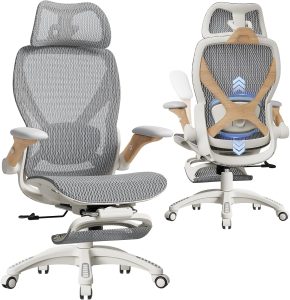
ELABEST X100 Ergonomic Mesh Office Chair: Footrest Worth It?

Metal Squirrel Baffle 17″: Wraps Around Posts Without Removal
About the reviewer
Jarrett Dottin
Licensed Occupational Therapist dedicated to helping others live their best lives. Certified lymphedema therapist and amazon affiliate who has tested over 1,000 different products.
More reviews you'll want to read
11PCS Grip Strength Trainer Kits Review: 11 to 132 lbs in One Box
Read review →
FlintRehab Therapy Putty: 4 Resistance Levels Review
Read review →
Color Sorting Sensory Toy for Kids Car Rides
Read review →
Self-Propelled Shower Wheelchair Review
Read review →
Special Supplies Egg Pencil Grips: OT’s Grip Support
Read review →
Lipedema vs. Lymphedema: How to Tell the Difference
Read review →