

Reviewed by
Jarrett Dottin
Licensed Occupational Therapist dedicated to helping others live their best lives. Certified lymphedema therapist and amazon affiliate who has tested over 1,000 different products. About JD →
As an Amazon Associate I earn from qualifying purchases. Some links on this site are affiliate links, if you buy though them I may make a commission at no extra cost to you.
Quick Verdict
One kit, three different jobs: pinch clips for finger independence, extension bands for the extensor muscles most people skip, and grip work for overall strength. As an OT who works with hands every week, this FitBeast finger exerciser covers more of the hand than most single-tool grippers. The training cards are what push it from “random gadget” to something you’ll actually keep using.
Clicking takes you to the seller's website. We may earn a small commission if you purchase, at no extra cost to you.
| Spec | Detail |
|---|---|
| Kit contents | Pinch clips, finger extension bands, stretch bands, training cards, coordination accessories |
| Resistance | Multiple color-coded levels |
| Trains | Grip, pinch, finger extension, finger independence, coordination |
| Best for | Adults, seniors, office users, musicians, climbers, rehab |
| Guidance | Included training cards for structured daily practice |
| Note | Adult use, contains small parts |
Why a finger exerciser beats a squeeze ball
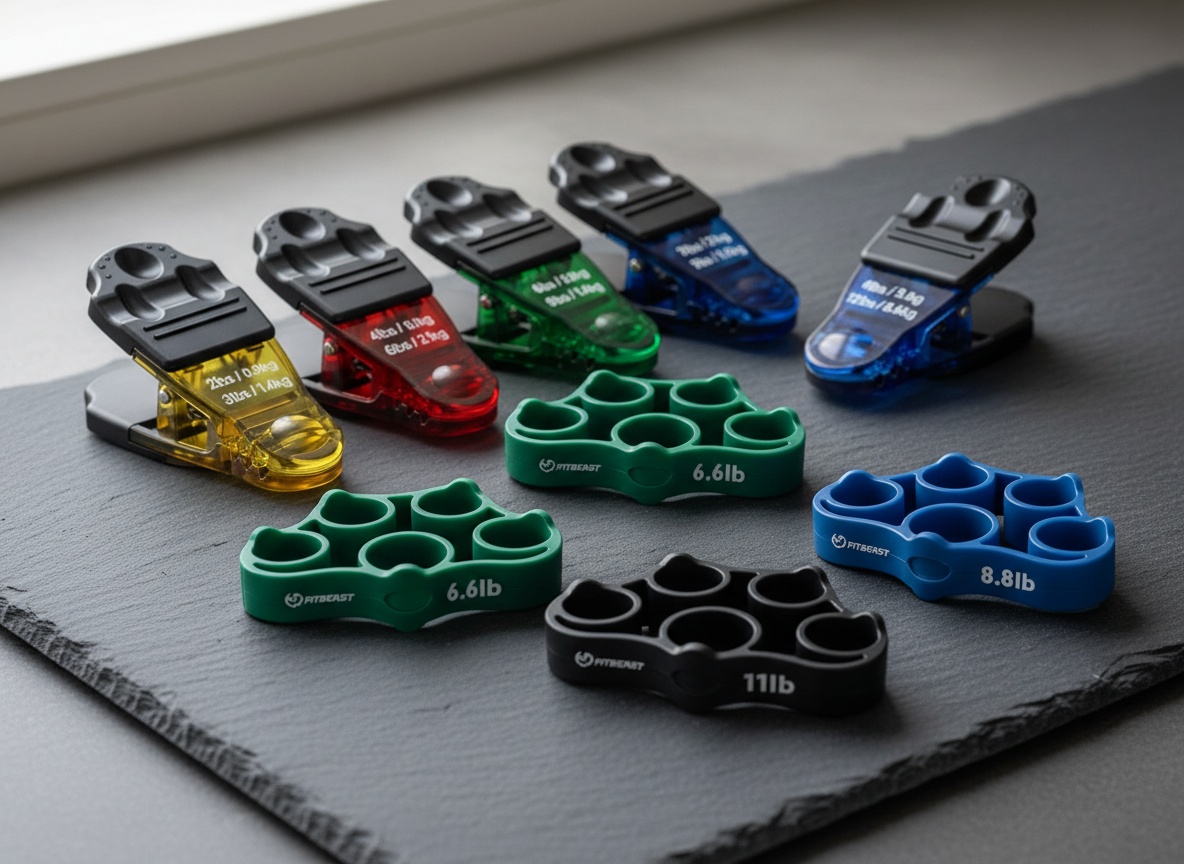
I’ve spent 15 years as an occupational therapist working with stroke recovery, arthritis, Parkinson’s, and post-surgical hands, and the pattern is always the same: people crush a squeeze ball all day and never once train the muscles that open the hand back up, the extensors that account for half of hand function. That’s exactly the gap the FitBeast finger exerciser set is built to close. It’s not one tool. It’s a small collection that hits grip, pinch, and finger extension, which is the trio I actually care about when I’m working with a client on real hand function.
What’s in the box and what each piece does
The set combines pinch clips, finger extension bands, stretch bands, coordination accessories, and training cards. The pinch clips are the ones that surprise people. You isolate a single finger against the thumb, which trains finger independence, the ability guitarists and pianists depend on and what rehab clients lose first. The color-coded resistance levels let you start easy and step up, so a beginner and someone further along aren’t stuck with the same tension.
The finger extension bands loop around the fingertips so you open the hand against resistance. That’s the extensor training I mentioned. Grip work is the piece everyone already understands. Put it together and you’re covering flexion, extension, pinch, and coordination in one kit instead of buying four separate gadgets.
How it holds up in real hand training
The range of resistance is wide enough to matter on both ends. A post-surgical client can start on the lightest band and barely feel it; someone training for climbing can move up to a level that genuinely burns. In practice, I’d run 10 slow reps per finger on the pinch clips, rest, then repeat, and the color coding means a client can track their own progression without me in the room.
The extension bands are where I’d point most home users. If you type all day, game for hours, or grip tools for a living, your hand is stuck in a closed position most of the time. Training the opening motion balances that out, and this set gives you a proper way to do it instead of the rubber-band-around-the-fingers hack people improvise. They toss into a drawer or a bag without any fuss.
The small parts are the real catch
These are little pieces, and that cuts both ways. Great for travel and a desk drawer, easy to lose if you’re not organized about it. The extension bands and clips are exactly the kind of thing that migrates under the couch. The listing flags it too: this is adult training gear with small parts, so it’s not something to leave lying around kids. Keep the whole set in its case between sessions and you’ll avoid the annoyance of hunting for a band that walked off. It’s a papercut, not a dealbreaker, but it’s worth knowing before you buy.
Get it now
FitBeast Finger Exerciser Set
Get the best price on Amazon →As an Amazon Associate I earn from qualifying purchases. Some links on this site are affiliate links, if you buy though them I may make a commission at no extra cost to you.

Who this finger exerciser is really for
Three groups get the most out of this. Musicians and gamers who need finger independence and dexterity, not just raw grip. People rebuilding after an injury or surgery who need a gentle starting resistance and a way to progress. And office and desk workers whose hands are locked closed all day and need the extension work to stay balanced. Climbers and gym folks chasing grip strength will like it too, though they’re the group most likely to outgrow the lightest levels quickly.
If you’re managing arthritis or general stiffness, the variety here is a plus. You’re not locked into one motion. You can pick the piece that matches how your hand feels that day and still get a real session in.
Finger exerciser set vs a single grip trainer
A single heavy gripper reaches higher peak crush resistance but covers only one motion. If your only goal is a stronger crush grip, one dedicated tool climbs higher and feels more satisfying. Where it loses is everything else: it does nothing for finger extension, nothing for pinch isolation, and nothing for coordination. This FitBeast set trades peak grip resistance for coverage across the whole hand. For rehab, dexterity, and balanced training, coverage wins. For a powerlifter who just wants a harder squeeze, a single heavy gripper is the better buy.
My advice before you start
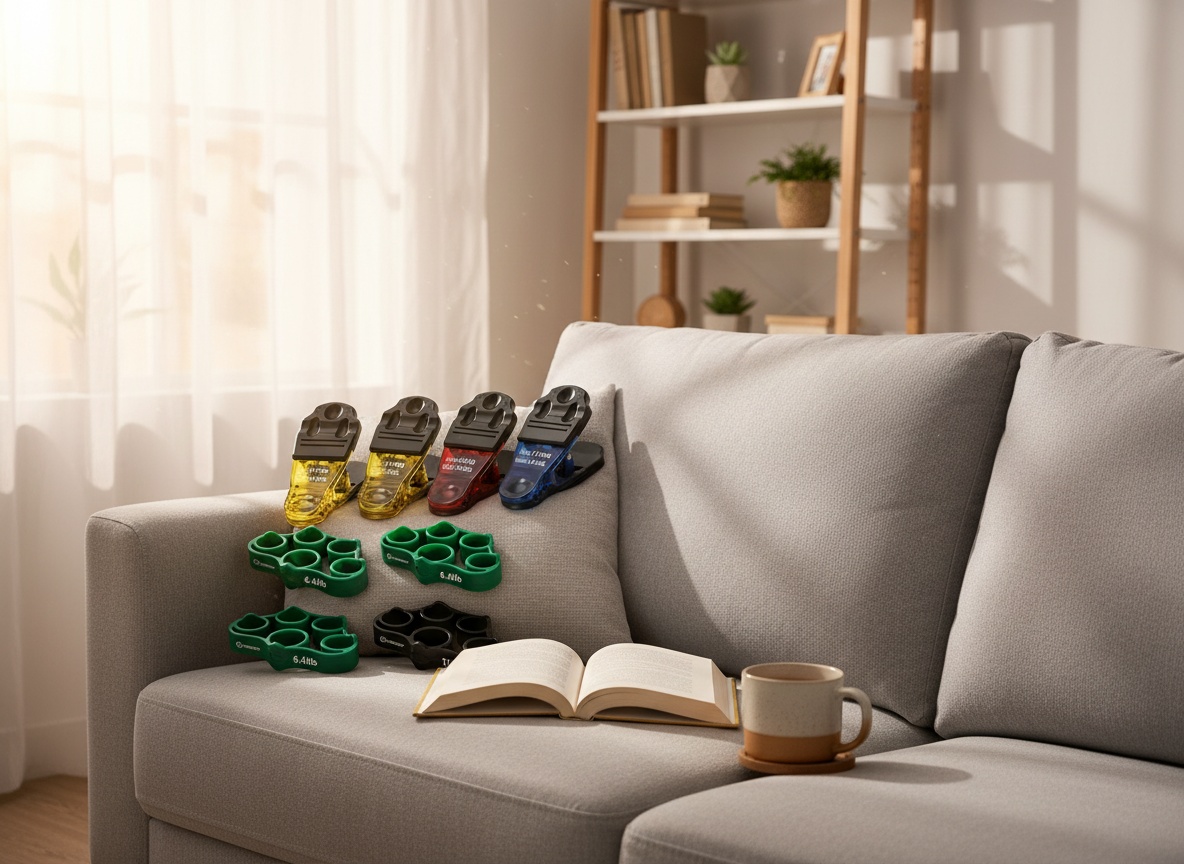
Start lighter than your ego wants. Hand muscles are small and they fatigue fast, and the fastest way to quit is to grab the hardest resistance on day one and end up sore. Use the training cards for the first week so you’re not making it up. Do the extension work even if it feels pointless, because that’s the piece most people skip and the piece most people need. And keep everything in one place between sessions. If you have a specific injury or a diagnosed condition, run your plan past your therapist first, since the right resistance and rep count depends on where your hand actually is.
Pros
- Covers grip, pinch, and finger extension in one kit instead of separate tools
- Color-coded resistance levels make progression easy to follow
- Pinch clips train finger independence, big for musicians and rehab
- Training cards give you a structure so you actually keep using it
- Small and light, easy to keep at a desk or throw in a bag
Cons
- Small parts are easy to misplace if you don’t keep them together
- Serious grip athletes may outgrow the lightest resistance levels
- Contains small parts, so not suitable around children
Frequently Asked Questions
Is this finger exerciser good for guitar players?
Yes, especially the pinch clips. They let you isolate one finger at a time, which is the exact finger independence guitarists need for cleaner fretting. The extension bands also help balance out the hand after long practice sessions.
Can I use it if I have arthritis?
Generally yes, because the light resistance levels let you start gently. That said, run it past your doctor or therapist first if your arthritis is active or painful. Start with the easiest band and stop if a motion causes sharp pain.
Does it replace physical or occupational therapy?
No, it’s a home training tool, not a treatment plan. It works well as something you do between appointments or as maintenance once you’ve been cleared. If you’re recovering from surgery or injury, your therapist should guide your resistance and reps.
How often should I use it?
Short daily sessions beat long occasional ones for hand training. In practice, 10 slow reps per motion, pinch clips, extension bands, grip, most days is enough to see progress. If your hand feels sore the next morning rather than just fatigued after the session, back off and take a rest day.
Is it too hard for someone with weak hands?
No, the lightest resistance levels are designed for gentle starts. That’s part of why it works for seniors and rehab users. You build up gradually rather than being stuck on one difficulty.
Can office workers use it at their desk?
Yes, and it’s a strong fit for desk work. The pieces are small enough to keep in a drawer and use during breaks. The extension bands specifically counter the closed-hand posture that typing and mousing lock you into all day.
Do I need any app or subscription?
No app, no subscription, no account. It’s a fully physical kit with printed training cards for guidance. You open the box and start.
Will heavy gym users find it strong enough?
For dexterity and finger work, yes. For pure maximal grip strength, the higher levels help but dedicated athletes may want a heavier single gripper alongside it. This set’s real strength is variety across the hand, not peak crush resistance.
Get it now
FitBeast Finger Exerciser Set
Get the best price on Amazon →As an Amazon Associate I earn from qualifying purchases. Some links on this site are affiliate links, if you buy though them I may make a commission at no extra cost to you.
About the reviewer
Jarrett Dottin
Licensed Occupational Therapist dedicated to helping others live their best lives. Certified lymphedema therapist and amazon affiliate who has tested over 1,000 different products.