

Reviewed by
Jarrett Dottin
Licensed Occupational Therapist dedicated to helping others live their best lives. Certified lymphedema therapist and amazon affiliate who has tested over 1,000 different products. About JD →
As an Amazon Associate I earn from qualifying purchases. Some links on this site are affiliate links, if you buy though them I may make a commission at no extra cost to you.
Quick Verdict
The HeyChy compression recovery system does the one thing I care about as a therapist: it cycles rhythmic air pressure up the leg to move fluid and calm tired muscles, and it does it cordless with 5 pressure levels. It’s not medical-grade lymphedema treatment, but for circulation support and post-activity recovery at home, it’s a reasonable tool. Check the current price at the product page.
Clicking takes you to the seller's website. We may earn a small commission if you purchase, at no extra cost to you.
| Massage modes | 3 |
|---|---|
| Pressure levels | 5 adjustable |
| Power | Cordless, removable battery |
| Target areas | Calves, ankles, feet, thighs |
| Includes | Storage bag |
| Eligibility | FSA/HSA eligible |
Why a Compression Recovery System Caught My Attention
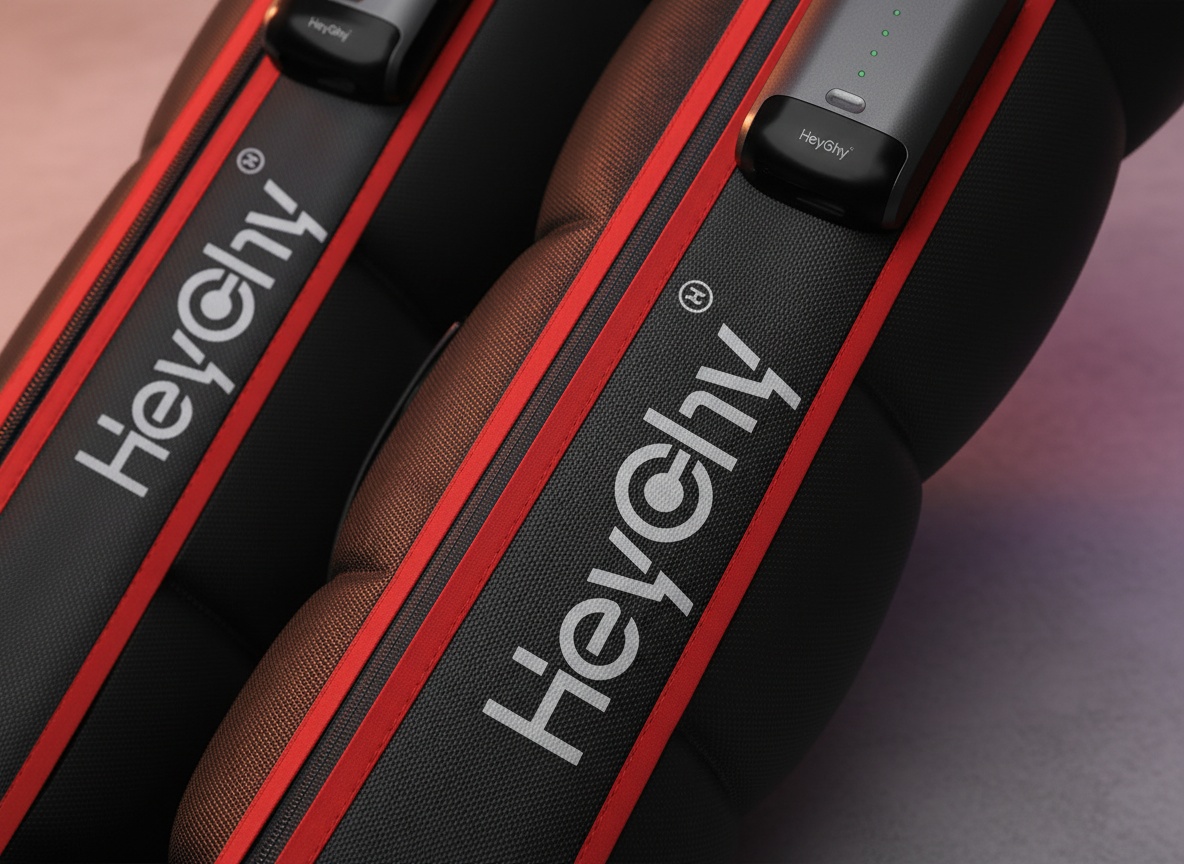
Compression that moves up the leg in a sequence is the same principle I use every day in practice. As an OT and certified lymphedema therapist, I spend a lot of my time helping people move fluid out of swollen legs and calm sore muscles, so when I picked up the HeyChy compression recovery system I looked at it through that lens. The idea is simple: air bladders inflate in a rhythm, squeeze the tissue, and help push blood and fluid back toward the heart. You can see the current price and availability on the Amazon listing here.
This is not a knockoff of the big-name recovery boots the pro athletes use, and it’s not trying to be. It’s a home version that leans into being cordless and easy. And that combination is what makes it interesting for the people I usually work with.
What HeyChy Actually Built Into It
3 modes, 5 pressure levels, and no cord. Those are the three specs that matter most here. The airbags are positioned to hit the calves, ankles, and feet, which is exactly where most people carry swelling and fatigue by the end of the day. There’s no heat function, so if you were hoping for warmth built in, this isn’t that. It’s pure compression.
The auto-adjusting fit is a nice touch on paper. The unit senses your leg shape and adapts, which matters because I fit compression on legs of every size, and a device that only works on one shape gets frustrating fast. The removable battery means multiple sessions per charge, and the whole thing packs into a storage bag. For travelers or anyone who doesn’t want another cord snaking across the living room floor, that portability is the selling point.
How the Compression Actually Feels
The rhythmic squeeze-and-release is the whole experience, and it’s oddly relaxing. Sequential compression works by inflating in a wave, so you feel the pressure build at the foot and travel up toward the calf before releasing. That directionality is the point. It mimics the way I hand-treat a leg, moving fluid in one direction instead of just mashing on it.
At the lower pressure levels it’s gentle, more of a hug than a massage, which is what I’d steer an older adult or someone new to this toward. Crank it up through the 5 levels and it gets assertive. Runners and people who want that deep post-workout flush will probably live at the higher settings. Because there’s no heat, the sensation stays clean and focused on the compression itself, which some people actually prefer since heat can make swollen legs feel worse.
The Part I’d Flag Before You Buy
This is a recovery and circulation tool, not a treatment for medical lymphedema. That’s the friction here, and I say it as a lymphedema therapist. If you have true lymphedema, active blood clots, uncontrolled heart failure, or an open wound, a consumer compression device is not a substitute for medical care, and in some of those cases compression can be risky without clearance. The marketing leans hard on words like “professional-grade,” and while the sequential compression concept is sound, the device won’t replace a properly fitted medical pump or a therapist’s hands.
The other thing worth knowing: no heat. If you were expecting the warm-and-squeeze combo that a lot of leg massagers advertise, you won’t get it here. For some people that’s a plus. For others it’s a miss. Know which camp you’re in before you order.
Get it now
HeyChy Compression Recovery System
Get the best price on Amazon →As an Amazon Associate I earn from qualifying purchases. Some links on this site are affiliate links, if you buy though them I may make a commission at no extra cost to you.

Who I’d Point Toward This
Three people belong in this thing: the desk worker whose legs feel like concrete by mid-afternoon, the runner who finishes a training block and wants to flush the calves before sleeping, and the frequent flyer whose ankles puff up at 30,000 feet. The cordless design matters here because all three scenarios happen somewhere other than next to a wall outlet, and a corded pump is the kind of gadget that stays in the closet.
Seniors are another good fit, because the one-touch controls and LED indicators keep it simple. I’ve watched too many older clients give up on gadgets with confusing menus. The auto-adjusting fit also helps here since you don’t have to fuss with straps and sizing every session. If you or a parent just want to sit in a recliner, hit a button, and let the legs get squeezed, this fits that routine.
Compression Boots vs. Compression Socks
Compression socks give you constant static pressure; a pump like this gives you active, moving pressure. That’s the core difference buyers cross-shop. Compression recovery socks and sleeves are cheaper, always-on, and great for wearing all day, especially on a flight or a work shift. But they don’t pulse, and they don’t move fluid in a wave the way sequential air compression does.
Where the socks win is simplicity and price. You don’t charge them, you don’t sit still, you just wear them. Where a pump like the HeyChy wins is the active flush during a dedicated recovery session. A lot of my clients end up using both: socks during the day, the pump in the evening. They’re not really competitors so much as different tools for different moments.
My Advice Before You Order
Start low on the pressure. People assume higher is better and jump straight to level 5, then wonder why their legs feel bruised. Build up. Give your tissue a few sessions to get used to the sensation, especially if you’re older or new to compression. And keep sessions to a reasonable length rather than running it for an hour on the first day.
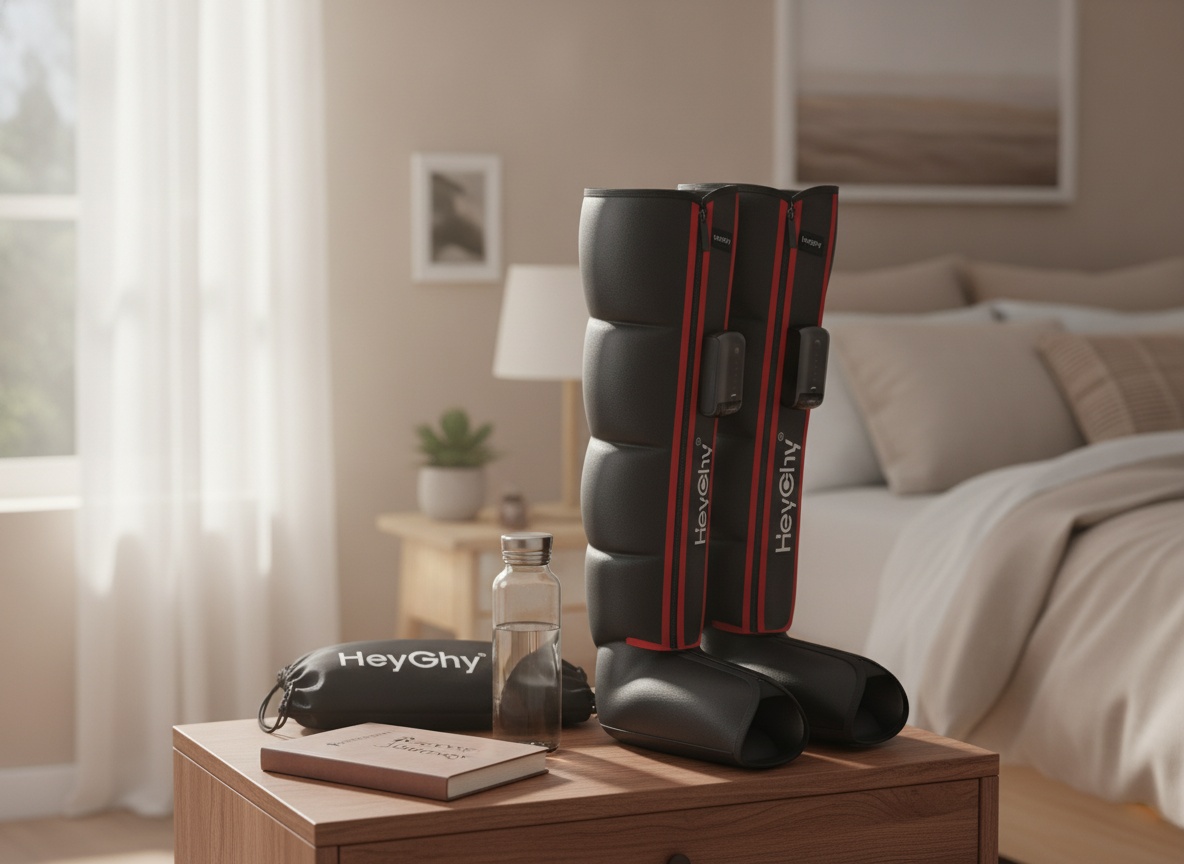
If you have any circulatory diagnosis, check with your doctor first. That’s not a throwaway line. Compression is a real intervention, and the wrong application on the wrong leg can cause problems. For a healthy person with tired, heavy legs, desk worker, runner, frequent traveler, this earns its spot on the nightstand. It’s FSA/HSA eligible, which takes some of the sting out of the price. Check current availability on the product page here.
Pros
- Cordless with a removable battery, so it’s actually portable and travel-friendly
- 5 pressure levels let you scale from gentle to assertive
- Sequential compression moves fluid in the right direction, not just random squeezing
- One-touch controls and LED indicators are senior-friendly
- FSA/HSA eligible, which softens the cost for a lot of buyers
Cons
- No heat function, which some people specifically want in a leg massager
- Not a substitute for medical lymphedema or clot treatment despite “professional-grade” marketing
- Higher pressure levels can feel too intense if you jump straight to them
Frequently Asked Questions
Can I use this if I have diagnosed lymphedema?
Check with your therapist or doctor first. A consumer compression pump is not the same as a prescribed medical lymphedema pump, and true lymphedema needs a properly fitted device and a treatment plan. It may help general swelling, but don’t treat it as medical care.
Who should avoid it entirely?
Anyone with a suspected or active blood clot, uncontrolled heart failure, an open wound on the legs, or a circulatory condition without doctor clearance. Compression is an active intervention and the wrong use on the wrong leg can cause harm. When in doubt, ask first.
How long until I notice a difference?
Most people feel noticeably lighter legs after the first session, the fluid has somewhere to go now. That said, one good session doesn’t fix a week of sitting. A 20-minute session most evenings will do more than an hour-long session on Sunday. The cumulative effect is the point.
Does it have heat?
No, it’s compression only. There’s no built-in warming element. For swollen legs that’s often a plus since heat can worsen swelling, but if you specifically want a warm massage, this isn’t the one.
Is it good for plantar fasciitis or neuropathy?
The airbags target the feet and heels, so it may ease plantar fasciitis discomfort and support circulation that helps with neuropathy symptoms. It’s supportive, not curative. For persistent nerve pain, pair it with the plan your provider gave you.
Is it FSA or HSA eligible?
Yes, the listing states it’s FSA/HSA eligible. That can offset the cost meaningfully. Keep your receipt and confirm the specifics with your plan administrator before submitting.
How is this different from compression recovery boots athletes use?
It uses the same sequential air-compression principle as pro recovery boots but in a cordless, consumer-friendly package. The high-end athletic systems typically offer more zones and finer control. For home recovery and circulation support, this covers the essentials.
Can seniors use it without help?
Yes, that’s one of its strengths. One-touch controls, LED indicators, and an auto-adjusting fit keep the learning curve low. Start on a lower pressure level and work up as it gets comfortable.
How long does the battery last per charge?
The removable battery supports multiple sessions on a single charge per the listing, though exact runtime isn’t specified. The removable design also means you can keep using it while a spare charges if you pick one up. Charge it fully before the first use.
Get it now
HeyChy Compression Recovery System
Get the best price on Amazon →As an Amazon Associate I earn from qualifying purchases. Some links on this site are affiliate links, if you buy though them I may make a commission at no extra cost to you.
About the reviewer
Jarrett Dottin
Licensed Occupational Therapist dedicated to helping others live their best lives. Certified lymphedema therapist and amazon affiliate who has tested over 1,000 different products.