

Reviewed by
Jarrett Dottin
Licensed Occupational Therapist dedicated to helping others live their best lives. Certified lymphedema therapist and amazon affiliate who has tested over 1,000 different products. About JD →
As an Amazon Associate I earn from qualifying purchases. Some links on this site are affiliate links, if you buy though them I may make a commission at no extra cost to you.
Quick Verdict
The donner cone turns the daily wrestling match of compression stockings into a rolling motion, and it works on both calf and thigh-high garments without gloves. It won’t fix everything for hands that can’t grip at all, but for reduced dexterity it takes a lot of the fight out of donning. Try it at the current price on Amazon.
Clicking takes you to the seller's website. We may earn a small commission if you purchase, at no extra cost to you.
The Sock Fight: A Donner Cone Scenario
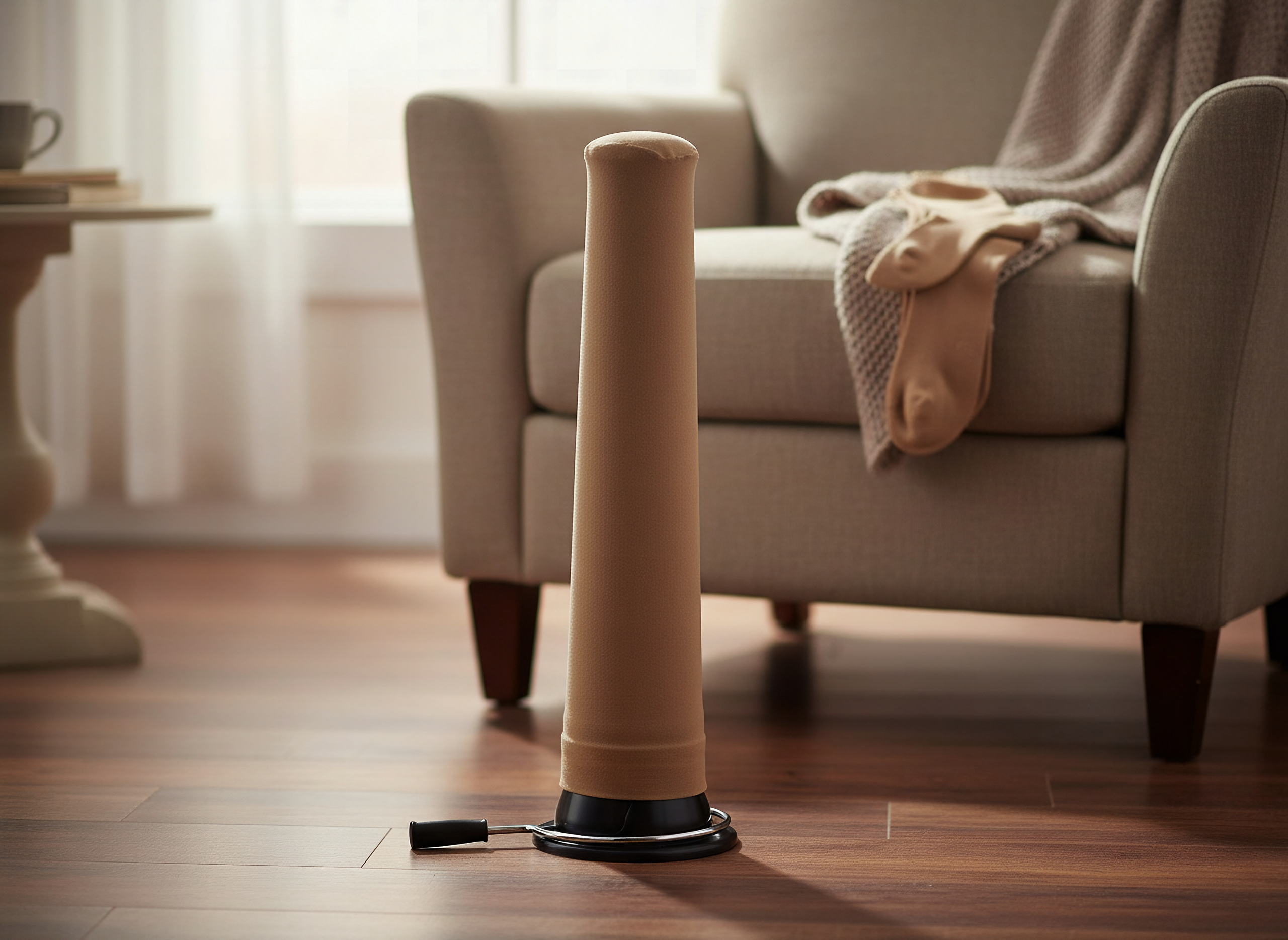
Pulling on a compression stocking is one of the most frustrating parts of a lot of my clients’ mornings. As an OT and a certified lymphedema therapist, I watch people fight these garments every single day, and the donner cone is one of the few aids that changes the motion instead of just adding a strap. Instead of gripping fabric and yanking, you roll the stocking onto the cone first, then roll it down the leg. That shift matters more than it sounds.
Compression garments are graded to squeeze, which is the whole point, and that same squeeze is what makes them so hard to get on. The Doff N’ Donner Cone is built to work with that resistance rather than against your fingers. If you or someone you care for dreads sock time, this is the tool I reach for first, before gloves, before stocking frames, before anything else.
How the Doff N’ Donner Cone Works
It’s a smooth cone you roll the garment onto, then roll off onto the limb. That’s the mechanic. You load the stocking or diabetic sock onto the cone, position it at the foot, and roll it up the leg so the fabric unrolls smoothly with the heel landing where it should. No pinching, no gloves, no fistful of elastic.
According to Sigvaris, roughly 85% of patients can use the cone independently, which lines up with what I see clinically once someone learns the rolling motion. It handles calf-high and thigh-high compression stockings, open-toe or closed-toe, and it’s latex-free.
| Spec | Detail |
|---|---|
| Works with | Calf & thigh-high compression stockings, diabetic socks, arm sleeves |
| Toe styles | Open-toe and closed-toe |
| Independent use | ~85% of patients per Sigvaris |
| Material | Latex-free |
| Not suitable for | Pantyhose; severe arthritis / hand restrictions |
| Sleeve | Not included |
What the Cone Actually Does
Rolling eliminates bunching and twisted seams that hand-application creates, and with lymphedema uneven pressure defeats the therapy. The cone lays fabric smoothly with heel placement correct on the first pass.
It’s also gentler on the garment itself. Compression stockings aren’t cheap, and yanking them stretches and weakens the fibers over time. Rolling reduces that strain, so the socks tend to last longer. For caregivers, this is the difference between a two-person job and something the person can often manage alone, which is a real win for dignity and independence.
The Catch You Should Know Before Buying
This is not for hands that can’t grip or squeeze at all. Sigvaris is upfront that the cone is not recommended for independent use by anyone with severe arthritis or significant hand restrictions, and I’d echo that hard. There’s still a rolling and loading step that takes hand strength and coordination. If arthritis is your main barrier, this tool alone may frustrate you, and you might need a caregiver to run it or a different style of aid entirely.
It also doesn’t work for pantyhose, and the sleeve is sold separately from some configurations, so read the listing carefully before you assume everything is in the box. There’s a learning curve too. The first couple of tries feel awkward until the rolling motion clicks, and people often give up too early before it becomes second nature.
Get it now
Doff N’ Donner Cone
Get the best price on Amazon →As an Amazon Associate I earn from qualifying purchases. Some links on this site are affiliate links, if you buy though them I may make a commission at no extra cost to you.
Who This Cone Compression Aid Fits Best
The sweet spot is reduced dexterity with functional grip, post-surgical clients, people managing lymphedema, seniors whose hands have weakened enough that the stocking wins most mornings. If you can still hold a rolling pin but not a fistful of tight elastic, that’s exactly who this is built for.
Caregivers and healthcare staff are the other big group. When you’re helping someone don a cone compression stocking several times a week, the rolling method is faster and puts far less stress on your own back and hands. Diabetic sock users who need smooth, seam-free placement to protect their skin also benefit here.
Cone vs. a Basic Sock Aid
A standard sock aid slides a loose sock over a plastic frame, and for regular socks it’s great. But it usually can’t handle the resistance of medical-grade compression, which is where people get stuck. The donner cone is built specifically for that squeeze, and it manages heel placement and wrinkle removal that a basic frame just can’t.
The trade-off is cost and patience in week one. A cheap sock aid wins on simplicity, and if you’re pulling on light cotton socks it’s probably enough. The moment you’re dealing with medical-grade compression, the kind that fights back, the frame aid loses and the cone doesn’t.
Tips From an OT Before You Buy
Give it a real week before you judge it. The motion feels clumsy at first and smooth by day three or four, and that’s normal. Practice loading the stocking onto the cone a few times without a leg involved so your hands learn the sequence. And be about your grip strength. If arthritis is severe, plan for a caregiver to operate it rather than expecting fully independent use.
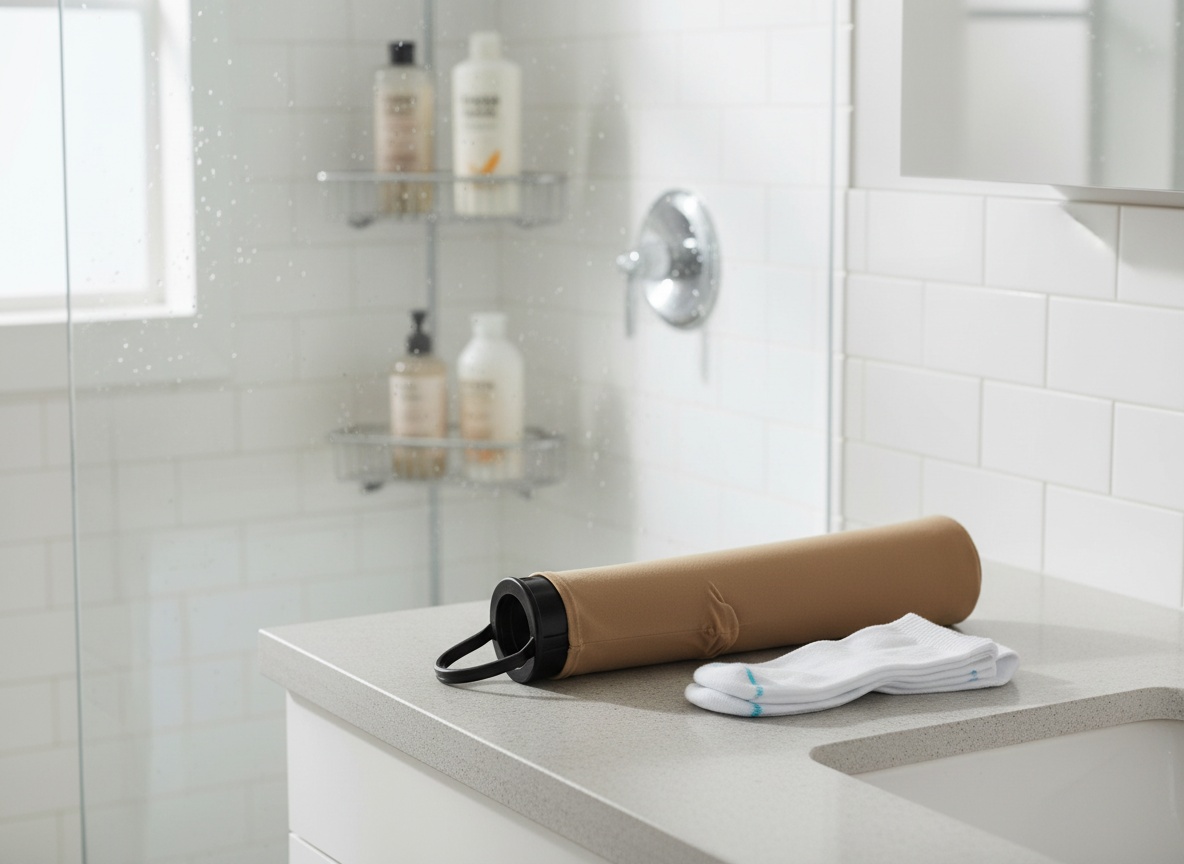
One more thing: confirm whether your configuration includes the sleeve, since some listings note it’s sold separately. If you’re already fighting your compression stockings every day, this is an easy one to try, and it may take the daily struggle down to a quick roll.
Pros
- Rolling motion works with compression resistance instead of fighting your fingers
- Smooth, wrinkle-free application with accurate heel placement
- Handles calf and thigh-high, open- or closed-toe garments and diabetic socks
- Gentler on stockings, helping them last longer
- Latex-free and usable without gloves; supports independent use for many
Cons
- Not recommended for severe arthritis or major hand restrictions
- Real learning curve; first few tries feel awkward
- Doesn’t work for pantyhose
- Sleeve may be sold separately depending on configuration
Frequently Asked Questions
Does the donner cone work for taking socks off too?
Yes, the Doff N’ Donner system is designed for both donning and doffing, which is where the “doff” in the name comes from. Removing compression garments can be as hard as putting them on, so the rolling motion helps in both directions.
Can I use it with diabetic socks, not just compression stockings?
Yes, it’s rated for diabetic socks as well as compression stockings and arm sleeves. The smooth, seam-free placement is a plus for diabetic skin that can’t tolerate wrinkles or friction.
Is the sleeve included with the cone?
Not always. The listing notes the sleeve is not included in some configurations, so check the specific product page before ordering. Confirm what’s in the box so you’re not surprised.
Will it help if I have severe arthritis in my hands?
Probably not for fully independent use. Sigvaris specifically advises against it for severe arthritis or significant hand restrictions because there’s still a loading and rolling step that needs grip. A caregiver operating the cone is a better route in that case.
How long does it take to learn?
Most people get comfortable within a few days of daily use. The first couple of attempts feel awkward, then the rolling motion clicks and it becomes quick. Don’t judge it after one try.
Can it be used for pantyhose or regular tights?
No, it’s not suitable for pantyhose application. It’s designed for compression stockings, diabetic socks, and arm sleeves specifically.
How do I clean the cone?
Wipe the smooth surface down with a mild cleaner as needed, since it contacts skin and garments daily. Follow the manufacturer’s care guidance on the packaging for specifics, and keep it dry between uses.
Is it worth it if I only wear compression a few times a week?
If donning is a real struggle even a few times a week, yes, because the strain and frustration are what it removes. If you rarely wear compression and get them on easily by hand, a simpler aid may be enough.
Get it now
Doff N’ Donner Cone
Get the best price on Amazon →As an Amazon Associate I earn from qualifying purchases. Some links on this site are affiliate links, if you buy though them I may make a commission at no extra cost to you.
About the reviewer
Jarrett Dottin
Licensed Occupational Therapist dedicated to helping others live their best lives. Certified lymphedema therapist and amazon affiliate who has tested over 1,000 different products.